Showing posts with label feminism. Show all posts

Tuesday, March 29, 2016

... On Melanie Klein [day 29]

Today I wasn't sure who to write about and realized I was running shorter on time than I usually like. I was also struggling to come up with an interesting and witty way to engage with any possible subject matter I might select for today. I did a personality test with someone new today and found it most enjoyable but it did get me thinking about women in Psychoanalysis and how we often think of Freud when this subject comes up (regardless of the fact that most of his ideas got proven wrong). But there were more than a few notable women involved in the practice as well including one of Freud's daughters. However, I didn't want to focus on her here because her name would still make her more recognizable than the woman on the docket for today: Melanie Klein. 

Due to the obscurity which she finds herself in, I felt that she would make a better pick for today. And in an effort to switch things up a little bit and for those who want a break from reading long things, I felt I'd embed a video from a Youtube channel called the School of Life that deals with philosophers and various thinkers from history. So without further ado, Melanie Klein. 


Monday, March 28, 2016

... On Juliette Gordon Low [day 28]

Welcome back. Let's start off with a question. Who likes Girl Scout Cookies?


Mmmmmmmmm


Oh put your hands down! That was a rhetorical question! Everyone likes Girl Scout cookies and if you don't you're a liar! In fact, if you're like me, spring has a nasty habit of turning you into something that looks like this and sucking all the money out of your wallet.

Portrait of a cookie addict

It probably goes without saying that a woman was the founder of the Girl Scouts but I didn't know the woman's name. So, to remedy this, I submit today's profile on Juliette Gordon Low. 

Philanthropist and Founder of the Girl Scouts

Ms. Low, also known as Daisy and "Crazy Daisy" due to some rather notable eccentricties for the time (such as *gasp* empathy for non-whites and a desire to see girls be independent!), was born in Savannah Georgia in 1860. A Southern Belle by many accounts this actually only sort of holds up under scrutiny. See, she was born not long before the Civil War and her family was, like many in the time (as often happens in a 'Civil war') divided on the issue. Her father, staunch Southerner, agreed with the Southern Secession and its desire to carry on slavery. Her mother on the other hand was a northerner supported abolition and the Northern efforts to restore the union. You know, suddenly that Juliette name is beginning to make a bit more sense. 

The war ended when Juliette was 4 and her mother relocated herself and the children to live with their maternal relatives in Illinois to get away from the hostilties of their neighbors. Oh did I mention that Low's family was kind of loaded?

Maybe not Scrooge McDuck diving into money rich but definitely loaded.

How loaded? I'm talking helped found Chicago loaded! So Daisy was rolling in more than a little bit of privilege while living up north. Her Grandfather was saavy investor and established a number of city functions. The monied upbringing could have made Low into a selfish, aristocratic brat but instead, exposure to the different groups of people her Grandfather would deal with on the regular opened up her empathy and awareness of cultures and ideas outside of her own. She'd eventually return to the South with her reunited family in 1865 but her attitude would stay with her. 

Fast foward several years and young "Daisy" (remember the nickname) was torn between traditional duty and her own restless soul. After a spat with her mother over finances she convinced her family to let her study painting since it was considered an "appropriate" profession for someone of her status and gender. She still got saddled with a husband at 26 who ended up distant from her. He ended up taking a mistress and then drinking himself stupid and eventually to death before the divorce proceedings he asked for could be finalized. 

OOOOOOOH MY!

So afterwards, Juliette Low travelled extensively. As a child she'd lost her hearing due to an infection and in what should have been an omen that some shit was going to go down, she lost hearing in her other ear when a bit of rice got caught in it during her wedding ceremony to the individual I'll be dubbing "The Dead Douche." So on these travels she was looking both for a treatment for her deafness and something to occupy her skills and time. A purpose. Somewhere to put her vast energy. 

Well she got one of the two. See while spending time in London she met the guy who founded the Boy Scouts. A fellow named Sir Robert Baden-Powell was struggling with a problem of all the girls who were showing up at his rallies wanting to be involved in scouting. He needed a solution to this. Now he could have just integrated the scouts but this was the early 1900's. Women still didn't have the right to vote yet and the idea of co-ed scouting was just balderdash to these folks. Low on the other hand saw an opportunity and so, rather than telling him, "Oh just let the girls scout you asshole!" decided to form her own organization both in Europe and back home. 

And she did just that in 1912. Born out of some of the experiments with a group called the Girl Guides in Britain, Low started her first troop in her home state of Georgia. She wanted to make the scouts a place where the girls could improve their self-esteem, enjoy the bonds of sisterhood, gain a measure of self-sufficiency and be open to girls across social, racial and ethnic lines. This was a far cry from the boyscouts which began as an early paramilitary training concept to teach boys to be prepared to defend their countries and prepare them for military service. 

No wonder one group is open to lesbian and transgendered girls while the other only just recently got around to allowing gay scouts but bans or segregates gay councilors. 
The boys could learn a thing or two

During her time leading the Scouts and developing the organization in the states Low became something of a fairy godmother figure for her first small troop and then other girls over time. Seemingly a strange combination of cool aunt and some fan fiction idea of a female Doctor from Doctor Who she'd stand on her head at meetings, tell spooky stories to the girls around the camp fire and went out of her way to see what it was the girls thought, wanted or believed rather than trying to force it down their throats. A concept some people struggle to grasp to this day. 


Now, it wouldn't be until some time much later that the Girl Scouts would start selling the cookies that they've become famous for but there's a lot more interesting little tidbits to the story. Fights over naming of the organization, the story of the man who was in charge of scouting in the states who wasn't too keen on the Boy Scouts having a sister organization. Presumably because he was a big man child who thought girls had cooties etc. The list goes on. And while it's likely that the Girl Scouts could have done better in terms of inclusion and diversity in their early days (but they began in the 1900's. Trying to be inclusive in that era at all put them ahead of the game), in the modern era they're still actively trying to improve and reach a more inclusive status as an organization. It wouldn't have begun at all however, without Juliette Gordon Low. 


Friday, March 25, 2016

... On Carol Burnett [day 25]

Today we're back in the present... sort of to talk about a woman who's name may be one that my friends' parents know or even their grandparents but I don't know how many folks in my age range know. Her name is Carol Burnett.

Carol Burnett. Comedic badass


Carol Burnett was one of the most influential comedians of the 60's and 70's. Her hit self-titled Variety show, "The Carol Burnett Show" ran for 11 seasons and stacked awards like firewood. This is a great run for anyone but it's especially notable because of both who Ms. Burnett was and when she was making the show. In order to talk about that though, we have to talk a bit about comedy first. 


Even now, Comedy is still in many ways considered a mans game! To verify you only need to take a look at the sheer number of male comics you can name vs the number of women. Similarly right now, we're arguably living in a golden age of late night laughs but late night comedy shows tend to be a sausage fest. From Stephen Colbert on the Late Show to the Daily and Nightly Shows, Last Week Tonight and even @midnight you'll be hard pressed to find estrogen in the lead spot in late night comedy. Right now, the only woman with her own late night talkshow/comedy show I can think of is Sammantha Bee. 

It was similar in the 60's and 70's and then Carol Burnett basically said F that noise. Born on April 26, 1933 the young Carol Burnett demonstrated a level of unapologetic boldness and a fascination with movies early. After her parents divorced she went to live with her grandmother in Hollywood California and by her own estimation would go to see something on the order of 6-8 movies a week in the various theatres around town and then would come home and act out what she'd seen with her friends. She studied to become a playwright in college in Los Angeles but left before her studies were finished to go with her boyfriend to New York to pursue acting. 

Now that's a pretty bold thing to do for a young person. But that was just her style it seems. You never hear about the missteps, set backs or failures when someone who got successful is doing these things and I'm sure they were there but one way or another she worked her way into the comedy acting biz starting with a children's show called the Winschel-Mahoney show in the early 50's. She was a popular performer for years before the Carol Burnett show launched in 1967 and that's when things get interesting. 

She's probably doing her Tarzan yell. If you don't get that...
links are at the bottom. 


See, at the time Carol was getting close to the 5th year of a 10 year contract with CBS. One of the stipulations according to her was that at any point during that first 5 year period she could "push the button" and get herself a variety show. I have NO IDEA how her agent negotiated this but with about a week left on the time for this she called an exec and pitched the idea. The execs tried to talk her out of it pointing out that the variety show world was a lot like the late night world now. They wanted her to be in a sit com they were making called Dear Agnes. Once again Ms. Burnett said "F that noise!" See, Carol Burnett had an ability we see from many successful women throughout history. She refused to fit herself to the narrow vision of what men around her thought was possible and shot for what she knew she could do. 

And by all accounts she kicked ass at it! The woman ran a massive sketch comedy show that would probably have been something like Saturday Night Live... but with a live orchestra on top of it. It was big, over the top and hilarious. It even allowed her to work with other great comics. For example, you might recognize the other red head in this image. 
Yes, that's Lucy and no she doesn't have any 'Splaining to do


Even after the show was cancelled, her legacy lives on and she still works even making an appearance on Glee relatively recently. She also received a Kennedy Center Honor to go along with her numerous other awards as recognition of a life spent making people laugh. 


Alright, that's a rap for today. Doing a profile on Ms. Burnett was wonderful and I hope that it brought a name to y our mind you may not have already known. Not sure who we'll peel back the curtain on tomorrow but it'll be a blast when we do. 


Thursday, March 24, 2016

... On Nannerl Mozart [day 24]

We got the Wayback machine up and running again! YAAAAAAY!

Cue theme music!

And now we're going to head back a few centuries to take a look at a woman who history has kind of let fall to the side and be overshadowed unnecessarily. So we're going back to the 1700's to look at Mozart. No, not Wolfgang, the OTHER Mozart. His older sister Maria Ana Mozart 

She didn't have quite as epic a name but she was still quite awesome! 

Born in 1751 Maria, like her more famous brother was musical prodigy. Her father, a court musician began her instruction at the age of 8 and she became and accomplished pianist in an incredibly short amount of time. She proved so dextrous and skilled that as a young girl she played all across Europe and was hailed as a genius in the 1760's. 

You may wonder why you so rarely even here that Mozart had a sister and to understand that, we've got to examine both her father and her relationship to her brother. 

Only the Jackson 5 would top them for awkwardness

Anna Maria (nicknamed Nannerl) was 5 years older than her brother and the two apparently led a fairly charmed childhood. Much of what we know is based on letters and correspondence at the time but it seems the two were quite fond of each other. Both the young musical prodigies were encouraged by their father Leopold, to play and he arranged shows for them all over Europe. Both were able to break down just about any composition they heard into notes and play the most difficult pieces with frightening ease. By all accounts they were equally skilled. 

Heck, Mozart himself may have actually felt his sister the better player. Some scholars debate but there seems to be evidence that Mozart believed his sister to be one of the best pianists in Europe even at the age of 12. In fact, she's likely the reason we even have Mozart as we know him at all, because seeing her play when he was a toddler was likely one of the things that drove his early interest in the musical arts. Again, there is debate about how much influence she had on her baby brother's musical accomplishments but I for one maintain that if nothing else, she'd probably have been assisting and filtering her father's instruction to her brother and would have helped him understand what he was doing. All of this concerned one may wonder why it's so rare she's heard about... 

Yeah, the answer is as obvious as you think. See their father Leopold was kind of jerk! Controlling and demanding his children had markedly different attitudes toward dealing with him. According to the correspondence that remain between the two, Around the age of 16, when Nannerl was getting to marrying age young Mozart announced that a piece he'd performed and had received well had been composed by his siter. Their father was outraged. Women simply didn't become composers in this era and he set his sights on marrying Maria off and devoting his time and energy to his second child and only son. 

That's right folks. One misogynist dickweed deprived us of what could have been the greatest duo of the 18th century. Nannerl was forced to stay home and teach wealthy children piano to finance her younger brother's growing popularity and success during his tours and forbid her to study new instruments or composition. She would find and lose her love of music multiple times throughout life but could never fully escape the controlling influence of her father. Imagine the collaborations the two could have done had their father not sabotaged his daughter's growth? Imagine how they could have pushed each other. 

Possibly his sister's biggest fan and most pissed off that you haven't heard of her

None were more incensed by their father's betrayal than Mozart himself. Apparently, he tried but failed to convince his sister to defy their father as he famously did and he wa the greastest proponent of her music and playing for a long time but the time nad distance slowly cooled their affection for one another. Anna Maria Mozart would contiue to support herself with her musical skills, providing lessons in piano for the rest of her life


The summation here is that Anna Maria Mozart brings up a dark and often overlooked area of historical scholarship. How many great women do we not know about because they lived in a period when their accomplishments wouldn't be celebrated SPECIFICALLY because they were women? How many master musicians, artists, thinkers, scientists etc, have gone unnoticed because they weren't walking around with the societally approved tackle? Heck, are there some of Wolfgang's works that we attribute to him that are actually his sister's secret compositions? We may never know. But musical genius ran thick in the Mozart family and it seems unfair not to acknowledge that lightning not only struck twice,  but that the Mozart we know and celebrate was actually the second striking!

Tomorrow, we got back to the entertainment world with someone who made us laugh ourselves silly. Until next time. 


Wednesday, March 23, 2016

... On Frieda Kahlo [day 23]

It seems that there's just a string of interesting women from the early 1900's to talk about today and this time, as I said yesterday, I've got an artist for consideration. Allow me to introduce you to one of the most famous painters from Mexico, one Frieda Kahlo.

Painter, Communist, Activist and survivor


Frieda Kahlo is a... difficult woman to parse in many ways, especially looking backwards through the lens of history. Born in 1907 she was the daughter of a German man who came to Mexico at the age of 19 and a Mexican woman of mostly native and Spanish descent. She was the 3rd of 4 daughters and would choose to embrace her German ancestry as a rebuke against Naziism during the 1930's by spelling her name Frieda and even shaved 3 years off her age (telling people she was born in 1910 rather than 1907) to link herself with the Mexican Revolution which began when she was 3. 

However it wasn't vanity that impacted this decision. At least, I wouldn't imagine it so. Especially since her self-portrait work, the art for which she's best known, tends to be so unflinching in its honest portrayals. Where some women might be tempted to fudge things a bit in a painting or hide things that society told them might be undesireable Kahlo instead boldly put those things onto her canvas. Remember, Kahlo is painting in the 30's and 40's. A woman painting herself with a prominent unibrow and faint mustache was revolutionary at the time (and likely more than a little challenging to gender norms even today). There's an argument to be made I think that this boldness is one of the things that still makes more than a few feminists quite enamored with her AND why she wanted to link herself with the Mexican Revolution of 1910. It's been argued that she felt her beloved homeland and herself had been shaped profoundly by revolution and on some level her life and very existence, had revolutionary tones to it. 

A lot of biographical information about Frieda Kahlo focuses on her relationships and sexual affairs. She was married to another amazing painter in Diego Rivera who was monumentaly unfaithful. Their relationship was stormy and Kahlo engaged in more than a few affairs herself but there are times that I feel too much attention gets paid to this and it can sometimes be a distraction for Ms. Kahlo's art and life (because patriarchy loves to police and demonize women's sexual appetites and habits but I do encourage examination of this because on some level, I think understanding Kahlo's sexuality, which could be as bold as her paintings, helps to understand them). 

Oh I am going to get SOOOOOOOO much use out of this meme


Equally important however I think is to understand that this is a woman who was in a great deal of pain! This is woman who contracted polio at the age of 6 and started painting at around 15 because she was in accident that left her impaled and forced her into a hospital bed for months in a full body cast. She'd recover from both but the Polio left her with a weakened right leg and a limp and who knows how much pain the impalement through her side caused her for the rest of her life. 

DEFINITELY NOT how it went down!


I point this out strongly because Frieda herself did. Many of her paintings dealt with emotional and physical pain. She refused the mantle of a surrealist but she drew heavily upon symbology to depict her real experiences including the accident and multiple miscarriages with that unflinching honesty and boldness I spoke about earlier. 
Title: Recuerdo


Title: The Column

Both of these images are related to Frieda's deeply personal experiences and pain. They also both connect in one way or another to the accident she suffered as a girl, implying to me that she carried the pain of that incident for much of the reast of her life. The images of course have deeper symbolism than that but why would I deprive you of getting the chance to study and learn it for yourself. 

Kahlo's work could be symbolic and graphic, keenly personal and unflinchingly candid about the things she went through and her work reflects that in numerous ways dealing with everything from broken hearts and meditating on the nature and effects of love to the pain and emotional disquiet of her miscarriages. 

Title: My Birth-1932


Title: Self-Portrait with Monkeys-1940


Title: The Two Fridas


In the end, rapidly failing health eventually got the better of her. Death comes for us all. A fact that I'm quite sure she was all too keenly aware of. Her popularity however, lives on and there's probably more than a few art history students out there right now at the exact moment you're reading this gushing over her rather extensively. I can understand why. 


And that, as they say, is that for today. It felt good to add another artist to the tally but tomorrow I think we're going to try the Wayback machine again. Join me next time when we take a look at a musician born into a talented family who, nevertheless seems to have been overshadowed by a prodigious male family member. 


Tuesday, March 22, 2016

... On Russia's All Female Battalions [day 22]

Welcome to day 22 of our month long project here. Today we're going to dig back into the ugly realm of warfare to take a peek at another battalion of women who you probably wouldn't want to meet on the battlefield. Let's take a look at Russia's "Women's Battalion of Death."


Now if you're like me you're probably surprised that Russia of all places would have female frontline fighters back in WWI. But as I've said before, war makes unusual things happen and an unusual confluence of factors including the abdication of Russia's Tsar at the time led a new government to attempt some pretty radical (for Russia) policies. On top of that a war was going on and Russia's soldiers were NOT doing well. Morale was low and most of the men were sick of this shit! 

Around this time the new head of the country's Minister of War, Alexander (Alexandra in some accounts I'm really not sure which) Krensky devised an idea of creating "shock battalions" to raise the men's spirits. The idea was these would be skilled and disciplined units that existed to galvanize the troops and rally them to fight on with zeal and enthusiasm. I'm not sure how good of an idea this was but leading men in a manner like this is more an art than a science and we're talking about a new, unstable government DESPERATE for ideas. Around this time a woman named Maria Bochkevia. A former peasant turned soldier, Bochkevia thought that an all female battalion, equal to any male regiment would shame the men into greater duty and valor. Basically, she thought to use the "No way am I letting a girl show me up" mentality against the male soldiers. That's right. She planned to use their own sexism as a weapon against them to get off their asses and actually fight. 

Step aside boys. This is a job for the ladies! 


Seemed like a good idea even if she was on some level ripping off the Dahomey Amazons (she probably didn't know and I'm only mostly kidding) and there was some precedent for it. Individual women on rare cases had snuck their way into the Russian military before in defiance of the old laws from before the Tsar's abdication and had a nasty habit of demonstrating bravery, skill and dedication to duty that made their male colleagues feel a bit sheepish. Some of that was probably due to the fact that a lot of the men were conscripts and the women were all clearly volunteers in these matters (score one for volunteer armies). In fact, officers went out of their way to praise the female soldiers they had that they knew about and the women made it a point not to neglect their duties. 

Now all that said, Bochkevia had her work cut out for her in this one. She was battling the inherent sexism of her culture and knew it (though she underestimated the extent of it) and knew she and her recruits had a lot to prove. She harshly punished any traditional expressions of femininity among her recruits including but not limited to giggling, excessive smiling and any behavior dubbed, "flirtatious." Between that and the shaved heads she enforced it was clear she was trying to make sure the women fit in with the Russian ideal of what a soldier was. That meant observing traditionally masculine behaviors and attitudes. Oh did I mention she encouraged swearing, spitting and drinking among her would be soldiers? 

I think Toph is saying that sounds like her kind of women's group!


For all her work though there were still problems. The uniforms they had to work with were generally ill fitting, unmade for women's frames and their equipment (boots particularly) didn't fit right. Furthermore, remember when I said before thta Bochkevia underestimated the sexist response she'd get from the men? Oh lord were the male soldiers on the front not happy at ALL to see the women's battalion. Though skilled in battle and demonstrating great courage under fire, this seemed to only make the men more angry at the new battalion rather than encouraging them to fight and their anger got directed both at the women they deemed unfit for combat, as well as the government they felt was keeping them in the war that, as stated before, they wanted no part of anymore. 

Unfortunatley, when another revoution occurred the women's battalions were disbanded and to make matters worse, many of the soldiers didn't transition back to the non-war world well. Not for lack of trying but the hostility toward them was strong. The shaved heads marked them as being part of the old regime's propaganda attempts and between that and the sexism that many women are attacked with for daring to be something other than what their society deems appropriate many of the women were assaulted and discriminated against after the war though others did stay and fight in other conficts within and outside of Russia. Even so, a complex combination of interwoven factors has kept these women (about 6000 served in these sorts of units) out of history and it is a shame because you can't learn from a history that's not discussed and you can't apply the lessons. That said, Russia didn't forget about the idea entirely and today some of this idea can still be seen in the fact that their elite special forces, the Spetnaz, have incorporated women and co-ed units for some time now.


There's a lot of stuff to unpack with the stories of units like this. All kinds of complex issues from the presence of toxic masculinity to the politics of using women as propaganda props to the concept of performative masculinity and femininity as well as the cultural design of gender roles. All of these are topics which are perhaps a bit heavy for this space and things that I'm admittedly not well versed enough to speak on. As such I'll tell you to go out and seek knowledge yourself if it's something your interested in. Google is your friend. And with that I end things for the day. We've dealt with a lot of figures from numerous fields... but I realize we haven't touched on any visual artists since that initial blast of mini-profiles at the start of the month. Tomorrow let's remedy that. 


Monday, March 21, 2016

... On Sister Rosetta Tharpe [day 21]


Good evening again one and all. Well the Wayback Machine is still being repaired and we're still hanging around here in the 1910's. Fortunately for me there's a great figure I want to talk about today. Do any of you know who this vision of loveliness and musical excellence is?


Well if you don't let me inform you. This ladies and gents is Rosetta Tharpe. Also known as Sister Rosetta Tharpe and if you're a serious fan of modern music in any serious capacity you have her to thank for the music you love. Don't know who she is or what she did? Well then...

How many times do I have to tell you that you're gonna learn when you come here before you believe me?!


See, Sister Rosetta is aptly named because she is in many ways the musical Rosetta stone. This musical prodigy is also known as the Godmother of Rock and Roll and it is her style, techniques and influence that would eventually give rise to rock legends like Chuck Brrry, Elvis Presley and Eric Clapton. Yes folks, Rock is her baby. 

Now it can be said that Rock and Roll as a genre has many prominent figures that shaped it but Rosetta is undoubtedly its mother. Born in 1915 to a woman named Katie Bell Nubin who was a preacher in a church known as COGIC (Church of God in Christ). The church was founded by a black preacher who believed in the power of music in religion and also was open to women being preachers. So Rosetta's mother evangelized across the Southern United States and played the mandolin as well as encouraging her daughter to play as well. Both sang and it was clear from early on that Rosetta was to music what Tiger Woods would eventually be to golf because as a kid she was already prodigiously skilled. 

Being the daughter of a preacher it's no surprise that Tharpe started off performing Gospel music predominantly with her mother. It was kind of the expected path for a black muscician in that era to begin their musical path in the church and, if they got popular, it would mostly be with the Gospel and religious music crowd. By the time she was 6 she was already regularly performing with her mother and playing guitar in performances that were half gospel concert half sermon. Tharpe was already defying convention and gaining attention both as a prodigy for her playing and for the fact her chosen instrument was the guitar, something that was incredibly rare at the time. 

By the time the 40's rolled around Tharpe had decided she didn't just want to sing for the Gospel crowd anymore. She'd signed a deal in 1938 to do songs for a label called Decca and recorded several Gospel hits that catapulted her into national prominence. It would also make her one of the country's first big time Gospel performers as well as commercially successful. 

It's around this time we start seeing the beginnings of what would become Rock later in the way she played the guitar. Her style blended numerous elements including blues and traditional folk music that would be the precursors to the specific stylistic elements that later singers would blend fully into Rock and Roll as we know it. This however, wouldn't be possible without her. 

Now don't ever let me here you forget where your music came from again.
Say "Thank you Ms. Tharpe" everytime you hear something rocking on your radio. 


When you look at the time line, you've got to give Ms. Tharpe her due. She started the ball of Rock music rolling and yet Berry and Elvis get so much more attention in our history than she does. It's a damn shame and if you haven't heard her before, you owe it to yourself to search out some of her recordings on Youtube at the very least. 

Unfortunately, musically Ms. Tharpe hit some speed bumps as she became more commercially successful. Balancing secular and religious music never seems to be easy, especially during the period when Tharpe lived and she's one of many Gospel singers who was abandoned by their original fans in the religious world when she started experimenting with more secular sounds and ideas. In the 40's when she started incorporating more jazz and collaborating with the pianist Sammy Price things started to fall off for her a bit. She went back to traditional religious music for a time but in the early 50's her only serious secular blues record from the time was a commercial flop because of the religious community's abandonment and criticism. 

It seems the audience just wasn't willing to tolerate a woman who defied tradition quite that much and Tharpe was forced to return to the well of Gospel during her career for the last years of her life. She passed away in 1973 having by this point I'm sure, seen the powerful effect of her music on others and the world. I hope that one way or another she ended up proud of her legacy. 

"She would sing until you cried. And then she would sing until you danced for joy."
~partial inscription on the stone


Wow! That was a long one. Sorry, I think I rambled a bit. That said, if anyone is worth rambling on it's Ms. Tharpe. I appreciate you all being patient with these. I know these are a little drier than some of the other stuff I've done AND drier than I really intended this space to be. We'll get back to humor in the future. Promise. Please join me tomorrow when I talk about... whoever the heck I want. Peace!


Sunday, March 20, 2016

... On Chien-Shiung Wu [day 20]

So... bad news. I tried firing up the Wayback machine and... well let's just say I'm glad I paid extra for the insurance on this thing because it's broken down again and I did NOT get back as far as I'd hoped.


This is what happens when you don't get your time machine serviced regularly. Lesson learned.


The service, however, is phenomenal (the tech from the future is here with parts and working on the thing right now but it's going to take a while) so while we wait let's talk about a scientist you probably haven't heard of before.

Another in a long list of people we should probably have learned about in school but didn't.

The great thing about this project is the blindspots it exposes in my own education. This is Chien-Shiung Wu a brilliant experimental physicist and one of the members of the Manhattan project. Yes, this woman is one of the folks who helped let the genie out of the bottle. 

Oh if only the genie she helped release were this entertaining.
Though admittedly, in the wrong hands, he's just as destructive.


I was looking to end up in ancient china for this trip, but as I said, didn't manage that. Instead today we deal with a woman who was born in 1912 in a small town in China called Taicang. Just a small girl with big dreams of becoming a scientist and raining death and destruction down upon her enemies along with ensuring the potential for a hellish nightmare apocalypse. Sigh. Why hasn't anyone made a movie about this woman yet? 

Kidding aside Chien-Shiung Wu was, by all accounts an incredibly determined, skilled and terrifyingly brilliant woman. She was a student of note in her home in China. Spurred on by her father, who supported girls' education in general and hers in particular, Ms. Chien was always interested in the sciences. She studied physics extensively attending multiple scientific study programs and working in more than one research center in China. There was only one problem for the voracious learner. There was no doctoral program in China to sate her hunger for knowledge at the time. 

While studying at the Academia Sinica as a researcher her advisor encouraged her to push her studies by traveling to the U.S. to get her Doctorate degree. She would arrive in the U.S. in 1936 and do her Doctoral studies at Berkley. Her timing was perfect and between that and her staggering intelligence she quickly caught the eye of and began studying with the leading physicists of her day. Her P.h. D. studies were complete by 1940... but that date and her profession should be setting off alarm bells for everyone because like so many other figures in this time (remember Heddy Lamaar) the 1940's would be a time that churned out a lot of fascinating people and events and molded people greatly. 

She'd be tapped for the Manhattan project early on in WWII. Her specific contribution was the discovery of how to enrich uranium for nuclear purposes. Her research essentially helped fuel the atomic bombs. 

Pictured: The Queen of Physics with a look that says, BOW!


That said, her scientific achievements didn't stop there but she did suffer from an all too common effect of the era and one that's still too often present. 

In the 50's there was a generally accepted theory known as "the Law of Parity" in physics. It held that objects that were mirror images of each other behaved the same way. You may think that the reason you haven't heard of this Law the same way you've heard of the Law of Gravity or the "Theory of Relativity" is that it's a dry, high level physics thing that wouldn't be known to those outside the field. Now you'd be partially correct but the other reason you haven't heard of it is that science tends to discard things that don't work and Ms. Chien helped kick the theory to the curb. Two colleagues of hers devised a hypothesis that could disprove the Law of Parity but it wa Chien, an EXPERIMENTAL physicist who made their hypothesis a reality and devised the experiment to check it. 

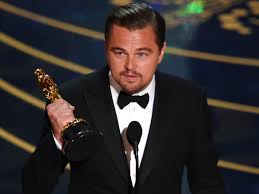
The experiment was hailed as a major breakthrough and a massive step forward for the field, solving one of its biggest riddles of the time. Ms. Chien's collegues were awarded the Nobel Prize for their work in disproving the theory. Chien got snubbed liek Leonardo DiCaprio on Oscar night! 

Oops, can't make those jokes anymore can I? Darn it! 


Here we see a recurring theme with female scientists being overlooked and marginalized in favor of their male colleagues. The snub here is one of those stories where you see clearly and in stark relief the fears too many men had and still have about women being good in fields that were generally seen as the work of men. Though she was snubbed by the Nobel committee, other scientific circles didn't make the same mistake and Chien herself was neither surprised nor ill prepared for the slight. 

She was, along with being a bad ass physicist of serious intellectual ability, a strong advocate for women and girls as well as being well aware of the sexism that was rampant in her field, encouraging women to continue anyway and smash down the barriers and glass ceilings with extreme prejudice. 


And if smashing down the barriers didn't work I'm sure she'd approve, at least on some level of more... shall we say extravagent measures to eradicating those barriers and obstacles within the sciences... 


I say we call this the Chien-Shuing Wu solution

Okay folks that's all for today and so I'm signing off. The Wayback machine is almost fixed but I'm told it shouldn't make any huge trips for awhile. Instead, we'll make a short hop next time to see a woman about some music. Until next time. 


Saturday, March 19, 2016

... On Pauley Perette, Mayim Bialik and Muccia Prada [days 17-19]

We're back boys and girls. Sorry it's been a few days. Life as they say, is what happens when we're making other plans and work kicked my tail hard. But to make up for it I've got not 1, not 2, but 3 women to profile today that folks should know more about.


So here's the plan. I've got three fascinating women who are all rather contemporary. I've said this before and I'll say it again, Women's history, like Black history and all history is forever being made and it pays, every now and again, to examine modern individuals who can teach us something about the things people are capable of that we don't often see. All three women today are celebrities to varying degrees but also pushed themselves to pursue higher education in one field or another. Without further ado, let's get started. 


First up is one of the heirs to the Prada fortune, Miuccia Prada. 


Noted as being worth around 4.2 billion dollars I'd never heard of Miuccia Prada before but apparently when one does research on celebrities with advanced degress she always comes up in the list somewhere. Born in 1949 in Milan Italy, Miuccia wasn't the most likely one to inherit the family's business. In fact, knowing that she was a member of the Italian Communist party makes you wonder if she'd be the black sheep of her family. Nevertheless it isn't like she merely dabbled in politics. Miuccia's area of focus is Political Science. One of the driest subjects possible nevertheless she loved the subject enough not only to study it but to excel at it, earning her doctorate degree in the subject. Her intelligence beyond that is clearly on display as she helped lead her family's company on its creative side for years, even going so far as to revitalize the brand with no serious fashion or business training while sticking her husband with the boring financial minutea. 


Moving on let's switch over to the sciences. I think by now I've demonstrated there's no shortage of brilliant women in the hard sciences but like Heddy Lamaar, sometimes such women also go into acting where their knowledge allows them to add a little extra to the characters they play. One such actress is Mayim Bialik, better known as Amy Farrah Fowler on the Big Bang Theory. 


Born in San Diego in 1975 Bialik actually began her career as a child actor in the 80's and starred on a show called Blossom between 1991-1995 but graduated high school in 1993. She was accepted to Yale and Harvard but told them both "no thanks" because she didn't want to deal with the East Coast or leave her parents at the time. Instead she studied at UCLA where she got her B.S. in neuroscience. Yes that's right, the actress who plays a Neurobiologist on Big Bang Theory actually has a degree in neuroscience. It doesn't get much more qualified than that. 

(I hate linking to wikipedia but it's the only place with information on her really. She doesn't have a biography.com page yet.)


Now, if you thought Ms. Bialik was hitting hte nail on the head with the character she plays the final profile for today is going to blow your mind. I present to you one Pauley Perette! 


My personal favorite on this list Pauley Perette is among other things an actress, activist, writer and business owner. Born in New Orleans (a fact she shares with her character she's best known for playing on NCIS; Abby Scuito) in 1969 she didn't start off wanting to act. Nevertheless, she did get that opportunity with her first big role starting in 1996 and would as noted, eventually star in the hit show NCIS as Forensic Scientist Abby Scuito. 

Pauley Perette seems to inject a great deal of herself into her character including the number of charitable and humanitarian causes for which she advocates and the nearly absurd amount of energy. She was heavily involved in the campaign against prop 8 in California and has become a staunch advocate for the homeless even though in 2015, she was attacked by a homeless man who threatened to kill her and assaulted her. Demonstrating a level of bravery and compassion that is difficult to fathom she still believes the man who attacked her is a victim as well and continues her work in this area. 

But her advocacy and good will aren't the only reasons she's on here. In fact they're relatively far removed. See Pauley Perette didn't start off wanting to act as I noted. She didn't want to play Abby originally. She wanted to BE Abby. Or someone similar. At first Ms. Perette was interested in a career in Criminology. As such, she earned a Masters degree in Forensic Science from Valdosta State College. So yes, just like her character she knows EXACTLY how to kill you and leave no evidence. Remember that. I kid I kid. It's all of this I think that helps her breathe so much life into her character. There's a richness and a life there that is wonderful to see and demonstrates once again that there is so much more to people and especially women, than we're often taught to see. 


And that's the show folks! Wooooo. Pitching a triple header is no easy task but this project deserves it. I'd also like to remind everyone that I always learn more about the wonderful women I create profiles for than I post. Why? Because I want folks to go and discover things for themselves and if I gave you ALL the info you wouldn't do it. There's deep rich stuff here that I suggest you check out. 

Tomorrow we stop with the contemporary and fire up the wayback machine once more. Not sure exactly where we're going just yet but I hope you'll strap in and journey forth with me. Until then!